Turn expertise into performance.
FISCH helps teams improve execution by building practical supports around the points where performance slips: handoffs, judgment calls, manager follow-through, process changes, and tool adoption.
From expertise to performance
Training is rarely the fix.
The problem is usually execution. People leave with the information, then return to the same workflow, the same defaults, and the same friction that produced the old behavior in the first place.
The Problem
The failure usually happens after the training.
People leave with the information. Then they return to the same environment that produced the old behavior in the first place. Priorities compete. Judgment gets fuzzy. Managers were never equipped to reinforce the change. The workflow still favors the previous way of working.
FISCH focuses on the points where execution actually breaks.
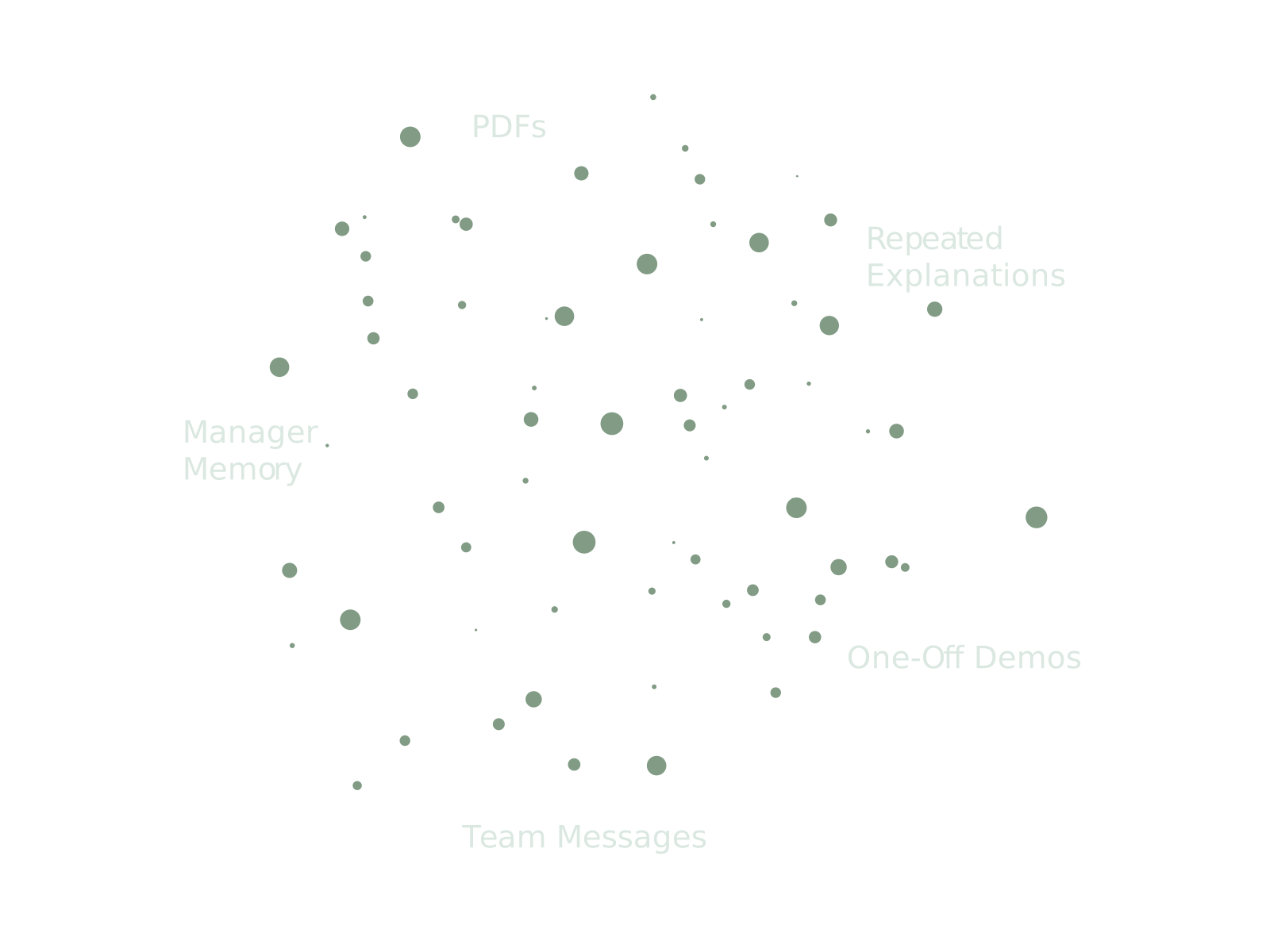
- Hesitation People understand the concept, then slow down when the situation turns real.
- Bad defaults The old move stays easier than the new one, so the old move wins.
- Weak judgment The standard was discussed, but never made concrete enough to use under pressure.
- Poor handoffs Critical context gets lost as work moves across people, roles, or teams.
- Manager gaps Reinforcement was expected, but managers were never given a clear role in the change.
- Adoption friction The rollout happened. The workflow did not change with it.
The Method
A practical operating model for behavior change.
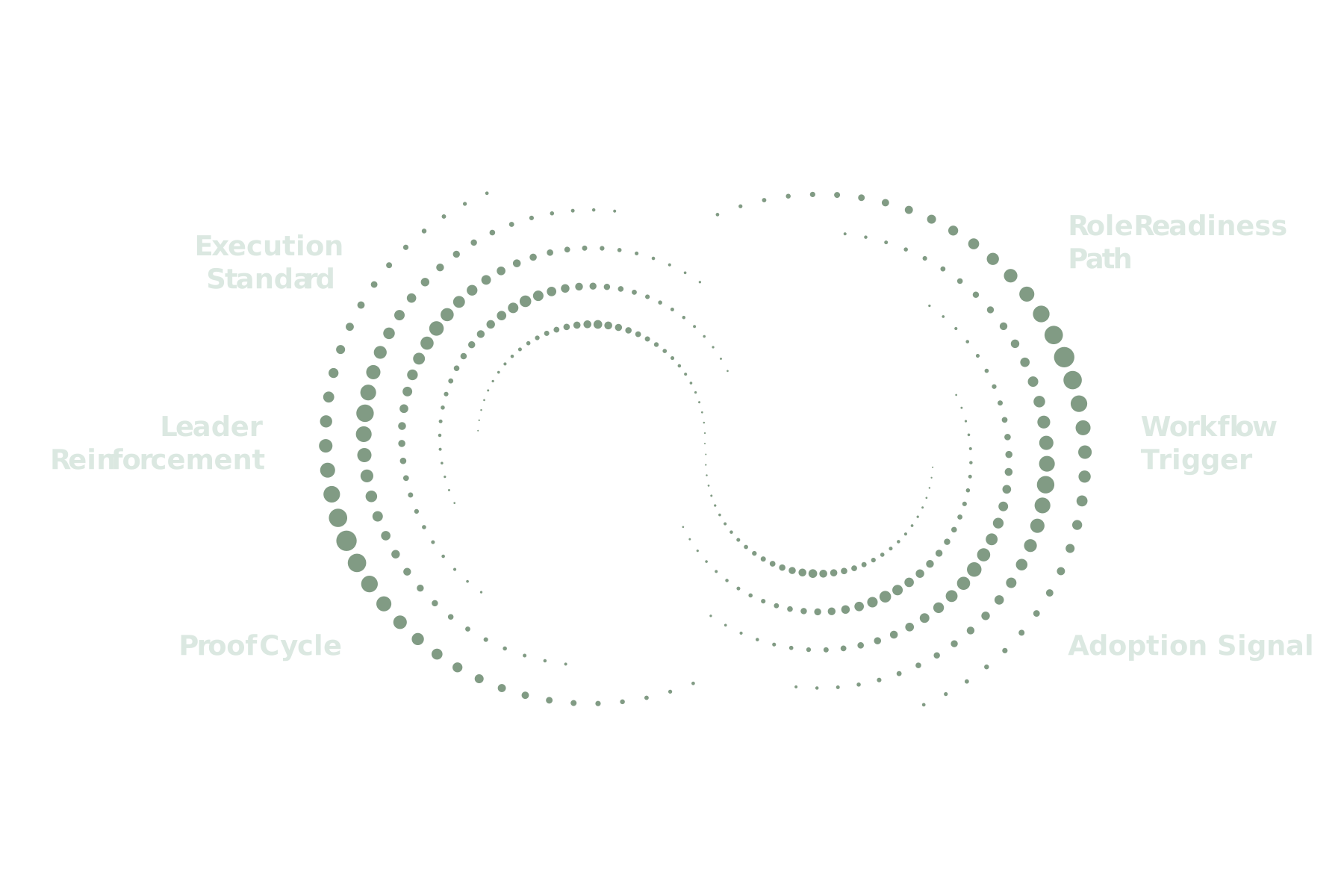
FISCH uses a four-part model: Aim, Move, Embed, and Scale. The point is simple. Identify the behavior that matters, support it quickly, wire it into the work, and expand only after there is evidence that it moved.
-
01 Aim
Define the behavior and the standard.
We identify the behavior worth changing, the moment where it breaks down, and the few measures that will tell us whether progress is real.
-
02 Move
Build the first useful support.
We create the first asset that can help immediately. That may be a Work Card, a prompt, a checklist, a script, or a short example.
-
03 Embed
Put support inside the workflow.
We place the support where the work happens and give managers a clear role in reinforcement, coaching, or follow-through.
-
04 Scale
Expand only after proof.
We look for evidence that the behavior changed, then package and extend what is working. No large rollout before signal.
What We Build
The deliverable depends on the behavior.
Some problems need one sharp intervention. Others need a small system. FISCH builds the mix that gives the behavior its best chance of sticking.
In the work
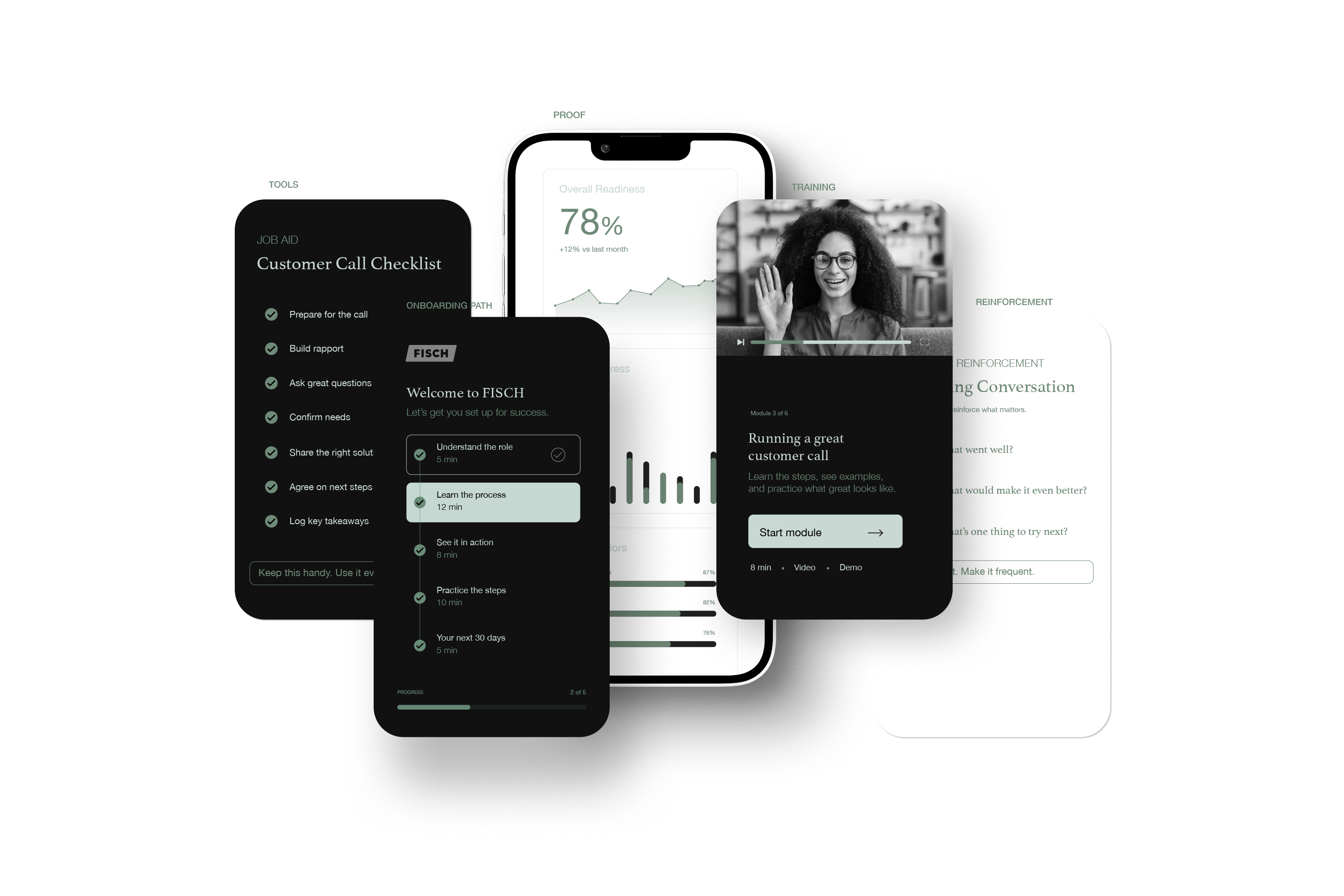
- Work Cards One-screen guidance for a decision, handoff, task, or conversation.
- Nudges Prompts placed inside the flow of work at the point where a choice gets made.
- Toolkits Practical assets that teams can use immediately without extra explanation.
Around the work
- Manager Mini-Kits Simple tools for observation, coaching, and reinforcement.
- Video Used for framing, demonstration, or rollout support when seeing the move matters.
- E-learning Used when context, scale, or structure actually requires it.
To prove it worked
- Proof loops Lightweight measures that show whether the behavior moved in practice.
Proof
Completion is a weak signal.
FISCH looks for evidence closer to the work itself. Did people use the support. Did managers reinforce the behavior. Did confidence improve. Did one or two business measures move with it.
Where FISCH fits best
Best for environments where the gap is visible and the stakes are real.
FISCH works best when a team can point to a recurring execution problem and name the cost of leaving it alone. This usually shows up in onboarding, adoption, manager capability, role readiness, and change work where expectations need to show up in daily execution.
-
Onboarding
→
Give new managers and new hires a clearer path to the behaviors that matter early.
-
Adoption
→
Make a new tool, process, or system easier to use in real conditions.
-
Manager capability
→
Make reinforcement, coaching, and follow-through more consistent.
-
Role readiness
→
Turn expertise into repeatable performance in client, operational, or leadership moments.
-
Change efforts
→
Embed new expectations into the actual rhythm of work.
Offers
Engagement paths built around the work.
FISCH can start with a focused problem or support a broader build. The entry point depends on the behavior, the environment, and how much support the change needs.
- Behavior Sprint A focused diagnostic and design sprint to identify the behavior, define the moment, and build the first useful support.
- Learning System Build A larger build that turns expertise into a practical set of supports, including learning assets where they earn their place.
- Embedded Enablement Workflow prompts, manager touchpoints, and reinforcement mechanisms designed to make the behavior easier to sustain.
- Proof + Scale Measurement, packaging, and rollout planning for what is ready to spread.
When performance slips, the pattern is usually visible.
The work is to name the behavior clearly, support it in the right place, and prove it changed. That is where FISCH comes in.
Or email hello@fisch.life